

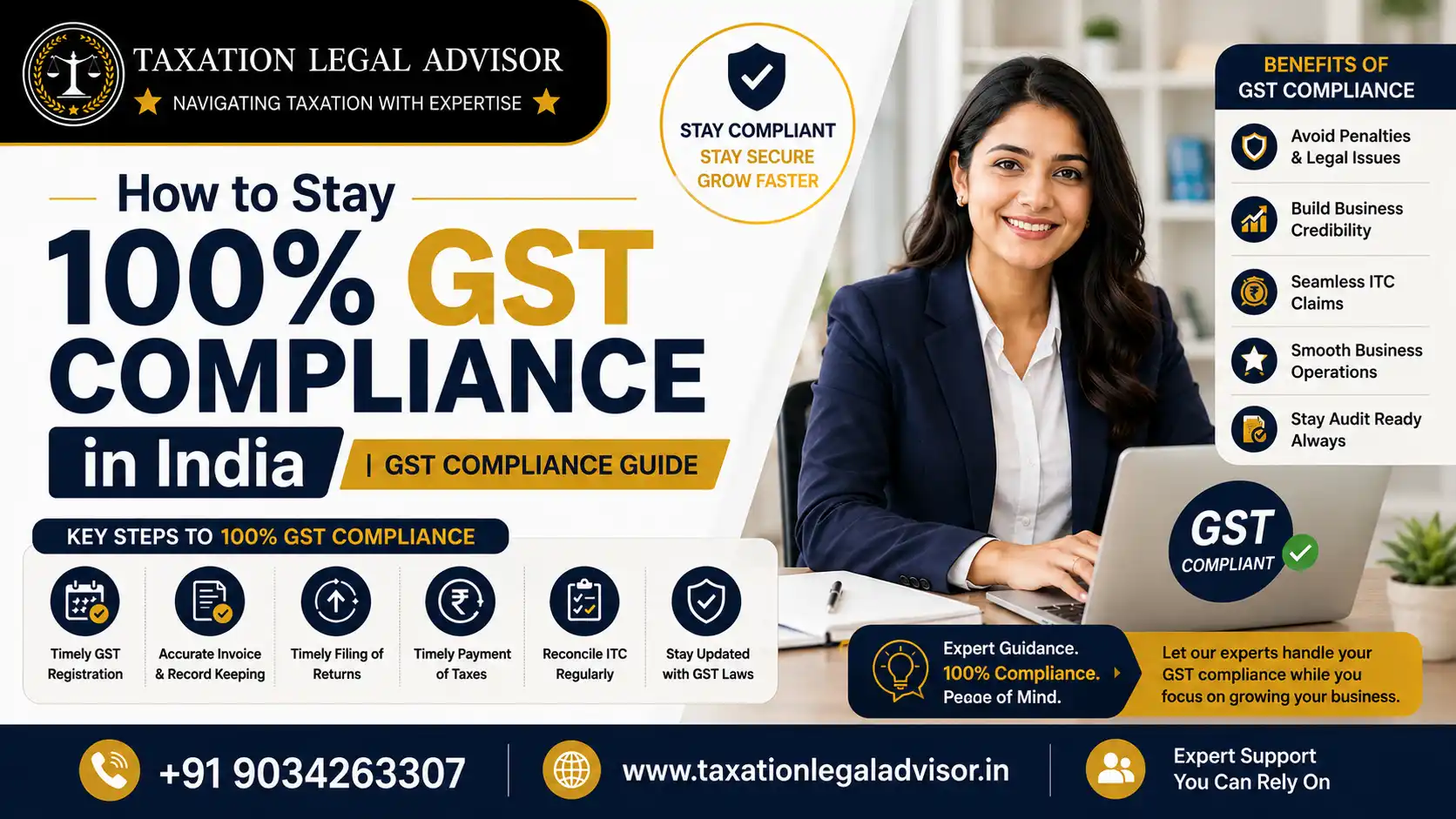
Maintaining GST compliance in India is an ongoing responsibility for businesses registered under the Goods and Services Tax regime. With frequent amendments, evolving interpretations, and strict procedural requirements, achieving consistent compliance requires more than just periodic return filing.
Businesses must adopt a structured and informed approach to ensure that all aspects of GST law—ranging from registration to reporting and documentation—are properly managed. Failure to do so can result in penalties, interest, and legal complications.
Understanding GST Compliance in India
GST compliance in India involves adhering to all statutory requirements prescribed under GST law. This includes accurate reporting of transactions, timely filing of returns, proper maintenance of records, and responding to notices or audits when required.
Key components of GST compliance include:
- GST registration and updates
- Timely filing of returns such as GSTR-1 and GSTR-3B
- Accurate calculation and payment of tax liability
- Proper claim of input tax credit (ITC)
- Maintenance of invoices and records
- Compliance with e-invoicing and e-way bill requirements where applicable
A comprehensive approach to these elements helps businesses remain aligned with regulatory expectations.
Importance of 100% GST Compliance
Ensuring full compliance is not only a legal requirement but also a practical necessity for smooth business operations.
Benefits of maintaining GST compliance in India include:
- Avoidance of penalties, interest, and late fees
- Reduced risk of departmental scrutiny and audits
- Seamless input tax credit flow
- Improved credibility with stakeholders and authorities
- Better financial planning and transparency
Non-compliance, even if unintentional, can lead to cascading issues affecting both finances and operations.
Key Steps to Ensure GST Compliance
Achieving 100% GST compliance requires consistent effort and well-defined processes. The following steps can help businesses maintain compliance effectively:
1. Maintain Accurate and Updated Records
All invoices, purchase details, and expense records should be maintained systematically. Proper documentation is essential for accurate return filing and ITC claims.
2. Timely Filing of GST Returns
Returns such as GSTR-1 and GSTR-3B must be filed within prescribed deadlines. Delays can result in late fees and interest liabilities.
3. Regular Reconciliation
Reconciliation between books of accounts and GST returns helps identify mismatches early. This includes matching outward supplies, inward supplies, and ITC data.
4. Correct Classification of Goods and Services
Incorrect classification can lead to wrong tax rates and disputes. Businesses should ensure proper classification under GST schedules.
5. Monitor Input Tax Credit Eligibility
ITC claims should comply with legal provisions and conditions. Ineligible or excess claims may lead to reversals and penalties.
6. Stay Updated with Legal Changes
GST laws are subject to frequent updates through notifications and circulars. Staying informed helps in adapting compliance practices accordingly.
Common Challenges in GST Compliance
Despite best efforts, businesses often face challenges in maintaining GST compliance in India. Some common issues include:
- Frequent changes in law and procedural requirements
- Complex ITC rules and restrictions
- Data mismatches between returns and records
- Technical issues on GST portal
- Delays in internal data collection
Addressing these challenges requires both awareness and systematic processes.
Role of GST Compliance Experts
GST compliance experts assist businesses in managing complex compliance requirements and reducing the risk of errors. Their role generally includes:
- Advising on GST provisions and updates
- Assisting in return filing and reconciliation
- Identifying compliance gaps and corrective measures
- Handling departmental notices and queries
- Providing guidance on ITC and classification issues
For businesses operating in metropolitan regions, GST compliance services in Delhi often cater to diverse industries with varying compliance needs.
Importance of GST Compliance Services in Delhi
Delhi, being a major commercial hub, involves high volumes of transactions and diverse business activities. GST compliance services in Delhi may offer practical insights into:
- Jurisdiction-specific procedures
- Handling departmental audits and assessments
- Managing large-scale transaction data
- Addressing sector-specific compliance challenges
Such localized understanding can contribute to smoother compliance management.
Preventive Approach to GST Compliance
A preventive approach is more effective than reactive problem-solving when it comes to GST compliance. Businesses should aim to identify and address issues before they escalate.
Best practices include:
- Conducting periodic internal GST audits
- Implementing compliance checklists and systems
- Training staff involved in accounting and taxation
- Using technology tools for data management and reconciliation
This approach reduces the likelihood of errors and ensures consistency in compliance.
Consequences of Non-Compliance
Failure to maintain GST compliance in India can lead to multiple consequences, including:
- Monetary penalties and interest liabilities
- Suspension or cancellation of GST registration
- Blocking of input tax credit
- Legal proceedings and litigation
- Disruption in business operations
Understanding these risks underscores the importance of maintaining strict compliance standards.
Conclusion
Staying 100% GST compliant in India requires a combination of accurate record-keeping, timely filings, regular reconciliation, and awareness of legal developments. Businesses must adopt a proactive and structured approach to manage compliance effectively.
While GST compliance experts and GST compliance services in Delhi can assist in navigating complexities, the responsibility ultimately lies with the business to ensure adherence to applicable laws. A disciplined compliance framework not only reduces risks but also supports long-term business stability and growth.
Contact Now – +919034263307
Visite websites – taxationlegaladvisor.in


